Wednesday, March 2, 2016

3/2/2016 Unit 3


Trump wins big on Super Tuesday, but rivals fight on


Link -


Summary - The subject of this article was the republican results for Super Tuesday. Super Tuesday is the first time that several states have their primaries on the same day. The article starts off stating that Trump is looking to be the Republican candidate for the 2016 election winning most of the states. However, the article then covers Cruz and Rubio’s results in the primaries as well.


Analysis - Super Tuesday is an important day when picking the party candidate. It is a way to view the opinion of a lot of states in a short amount of time. It also can either strengthen one candidates lead or have another pull ahead. In this case for Donald Trump he has only strengthened his lead. While Ted Cruz made an effort, it is sad to say that it looks like Donald Trump is going to be the Republican.

Tuesday, February 23, 2016

2/21/2016 Unit 2

Nevada and South Carolina Primary Winners and Losers


Summary - The subject of this article is the results of the Nevada and South Carolina primaries. The article also demonstrates the “winners” and “losers” from polling results during the primaries. The article lists the candidates that were the “winners” in the primaries. Hillary Clinton and Donald Trump both took first in their respective parties. The article also take into account the candidates that did not win but showed surprising results such as Marco Rubio. The article then covered the “losers” in the primaries. They pointed out candidates such as Bernie Sanders, Jeb Bush, and Ted Cruz.

Analysis - After reading the article one can clearly review the results from the recent primaries. The use of polling covers how candidates were doing before and after the primaries. The article also gives clear analysis of who the winners and losers of these primaries were. Not only does it show the actually winners it covers the people who still gained from the recent primary. The coverage of the losers is also good. The article explains why Jeb Bush dropped out when he did and how Bernie Sanders and Ted Cruz are going to have a tough time coming back from the loss. However, this article only covers one of the many primaries to come.

Wednesday, February 10, 2016


 Is making one feel the sensation of drowning constitutional? That is one of the questions being asked today in America over the subject of waterboarding. According to current U.S. law waterboarding is illegal form of interrogation. This law was only past in 2009. The eighth amendment states that “excessive bail shall not be required, nor excessive fines imposed, nor cruel and unusual punishment inflicted”. Wouldn’t one consider the sensation of dying cruel and unusual? Many politicians in the upcoming election are facing questions such as this. Several Republican candidates believe that the U.S. should bring back waterboarding as a method of interrogation. One the Democratic side candidates consider waterboarding as a form of torture and is unconstitutional. So one must ask, is waterboarding unconstitutional?

Waterboarding is a form of water torture or interrogation in which water is poured over a cloth covering the face and breathing passages of an immobilized captive, causing the individual to experience the sensation of drowning. The process can lead to both physical and psychological pain. Under the the definition of torture  ‘the action or practice of inflicting pain on someone as punishment or to force them to do or say something, or for the pleasure of the person inflicting the pain” one can determine waterboarding is a form of torture. Cased closed since waterboarding is torture it is constitutional, but then why has it been practiced in America up into the Bush Administration? After the 9/11 attacks the CIA waterboarded three prisoners in Guantanamo Bay.The CIA says they gained valuable information, but was it worth it?


Waterboarding has been happening as far back as the Spanish Inquisition. It was used for punishing and forcing confessions. The tactics were later used during World War II as well as the Korean War. Information gathered in this manner was usually not reliable. In the Korean War a U.S. airman “confessed” that the U.S. planned to use biological weapons against the North Koreans. After the 9/11 attacks prisoner Khalid Shaykh Muhammad fabricated his stories so that his interrogators would hear everything they wanted to hear. At the time vice president Dick Cheney claimed that waterboarding produced phenomenal results. However, there is no evidence proving that the techniques used to interrogate the prisoners prevented any attacks or saved any lives.

So is waterboarding constitutional? Legally speaking no, but was still used throughout American history up to the 21st century. The practice of it is clearly a form of torture and the results from its use prove to be ineffective. Although the Obama Administration has banned the practice of waterboarding in the military, it has a possibility for coming back once a new president is sworn into office. This may become a serious issue in the future of the country.


Resources - 
https://en.wikipedia.org/wiki/Waterboarding
http://www.washingtonpost.com/wp-dyn/content/article/2005/12/10/AR2005121000934.html
http://www.newsmax.com/Newsfront/john-mccain-waterboarding-liar-interrogation/2016/02/08/id/713308/

Wednesday, January 13, 2016


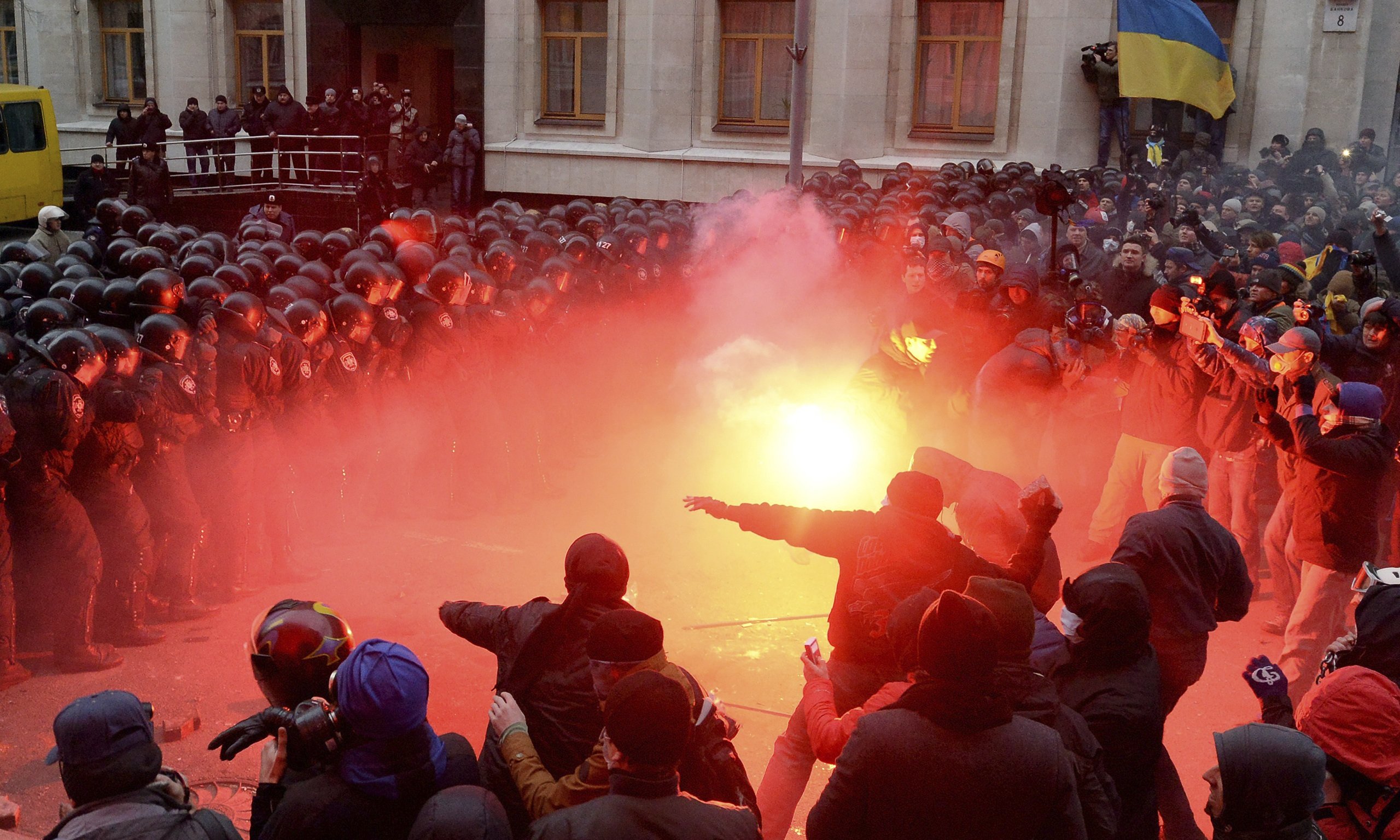
The Ukrainian Revolution took place in February 18th to 23rd in 2014. The revolution took placed in the Ukrainian capital of Kiev. It resulted in the ousting of the Ukrainian president Viktor Yanokovych, a change in the Ukrainian political system, and a restoration of their constitution. The problems that led to this revolution began with the disbandment of the Soviet Union. When Ukraine became an independent country again it was faced with many hardships such as corruption, mismanagement, and lack of economic growth. In the 2000’s Ukraine began to have a closer relationship with the European Union. Ukraine hoped to achieve an association agreement that would fund Ukraine if they would liberalise reforms. While president Yanokovych initially agreed to sign the agreement, he refused to do so last minute, and instead signed a treaty along with a multi-billion dollar loan with Russian. This caused many protests in the capital of Kiev.

The protest were at first were relatively calm. However that abruptly ended when protesters and police clashed on February 18th. 20,000 protesters made their way to the Ukrainian Parliament in hopes of revising the Ukrainian Constitution. Police officers dressed in riot gear blocked the way. The confrontation became violent and the once peaceful protesters became revolutionaries. The city became a warzone as the protesters made their way to the Parliament building, and the police trying to bring the protesters under control. The police at first used rubber bullets to stop the protesters but soon changed to live ammunition as well as tear gas and flash grenades. The police had snipers in buildings and on the streets to pick off protesters armed only with makeshift shields, crude weapons, and makeshift explosives. The violence only got worse from that point.

The next day the police began to set up checkpoints, set up restrictions on public transportation, and closed schools. The city of Kiev was put into a state of emergency. The violence among police and protesters only increased. Protesters built barricades to shield themselves from the constant fire of the police. Many buildings along the streets of Kiev were turned into hospitals managed by volunteer doctors. The number of killed, both police and protester  vary from 70 to 100. The number that were injured was over 1,000. Various news teams on the scene gave coverage of the turmoil that was happening at the time. By February 22nd the protesters had control of Kiev, and Yanukovych had fled the city into eastern Ukraine. The Parliament then unanimously voted to impeach president Yanukovych.

The aftermath of the revolution was met with many obstacles, most evident the pro-russian separatists in the south-eastern region of the country. A stand-off with the Russians over the annexation of Crimea and Sevastopol, which ended with the Russians gaining both territories. However the newly appointed leader of the Ukrainian government signed the European Union association agreement and agreed to reform the country’s judiciary and political system, and its financial and economical policies. Rebuilding Kiev was also a challenge that faced the Ukrainians but over time the city looks just as it has been. Ukraine now has a second chance to be a country that is much less corrupt and better for its people.

For More Information Check Out These Videos - http://www.bbc.com/news/world-middle-east-26248275

Resources - 
http://www.bbc.com/news/world-middle-east-26248275
https://en.wikipedia.org/wiki/2014_Ukrainian_revolution#Casualties
https://en.wikipedia.org/wiki/Euromaidan

Monday, January 4, 2016


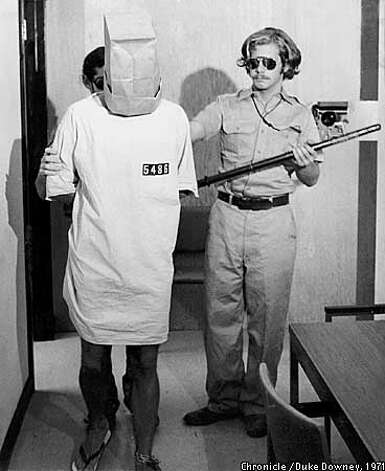
The Stanford prison experiment was a psychological experiment conducted at Stanford University from August 14-20, 1971. The purpose of the experiment was to study the psychological effects of becoming a prisoner or a guard. The experiment was led by the psychology professor Phillip Zimbardo and a team of researchers. Participants were told they were to take place in a two-week prison simulation and would be paid fifteen dollars a day. Out of the seventy-five volunteers twenty-four were chosen due to them being the most psychologically stable and healthy. The participants were split into two groups of twelve. Half of the participants would be prisoners and the other half would be guards. A makeshift prison was made in the basement of Stanford’s psychology building complete with small mock cells and a hallway serving as a prison yard.


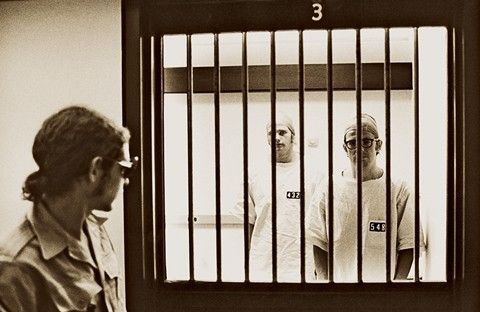
On the first day the prisoners were subject to a fake arrest and taken to their new prison. They were stripped and given uncomfortable smocks with a number, caps to cover their hair, and a chain around their ankle. Guards were outfitted with clothing similar to prison guard uniform and given wooden batons and sunglasses to show their authority. Guards were instructed to address prisoners by their number to take away their individuality. The rest of the day was uneventful with little problems. However on the second day the prisoners of one cell began to revolt by blocking the door to their cell by using their mattresses and mocking the guards. The guards subdued the revolt by bringing in more guards and using fire extinguishers to attack the prisoners. Once the rebellion was crushed the guards decided to use psychological tactics to control the prisoner. The guards set up a privilege cell and allowed the prisoners who were not part of the riot to stay in this cell, and they also received better meals.

Conditions only worsened for the prisoners. After only thirty-six hours prisoner #8612 began to act crazy. He screamed, cursed, and went into a rage. It took several hours before the research team was convinced he was suffering and let him go. Guards became more abusive to the prisoners. They wouldn’t allow prisoners to use the toilet, and provided them with a sanitary bucket in their cell. They would make the prisoners give up their mattresses and make them sleep on the concrete floor. Some prisoners were forced to be naked and suffered degradation. It became evident that some of the guards exhibited sadistic tendencies. Prisoner #416 was a newly admitted to the prison and was concerned about the state of the other prisoners. He began a hunger strike which angered the guards. He was sent to solitary confinement and the guards told the other prisoners if they gave up their blankets they would release him. All but one prisoner refused.
Zimbardo ended the experiment early when a graduate student showed major concern about the condition and the treatment of the prisoners after she was added to the experiment to conduct interviews. Out of the fifty observers of the experiment she was the only one who questioned the morality of it. The entirety of the experiment lasted six days. The research from this experiment has greatly affected the prison system in America. For example juveniles accused of federal crimes are no longer housed before trial with adult prisoners. We can learn a lot from the experiment. We can ask ourselves what will happen when one is given absolute power, and what will happen when you take away human individuality.


For More Information Check Out This Video - https://www.youtube.com/watch?v=L_LKzEqlPto

Resources  - http://www.prisonexp.org/the-story/
https://en.wikipedia.org/wiki/Stanford_prison_experiment
http://www.newyorker.com/science/maria-konnikova/the-real-lesson-of-the-stanford-prison-experiment

Monday, December 21, 2015

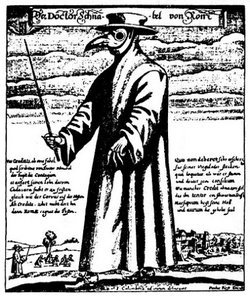
The Black Death is one on the most deadly pandemics in the history of humanity. The sickness ravaged Eurasia from the late 14th century to the early 15th century killing between 75-200 million people. The reason for these deaths was the bacterial infection caused by Yersinia pestis also known as the bubonic plague. A person is infected with the bubonic plague when they are bitten by a flea infected with the disease. The most common symptom of the bubonic plague are painful lymph nodes, known as buboes. They are commonly found on the armpits, groin area, and neck region of the body.


            The Black Death is thought to have originated in the arid plains of Central Asia. There are many ways that the plague could have traveled from Asia to Europe. The most common way was along the Silk Road. The plague would travel with Mongol armies, Eastern traders, or merchant ships on their way to Constantinople. It is estimated that 25 million people died before the plague reached Europe. The plague was introduced to Europe via Genoese traders. Under siege by the Mongol army, the Mongols catapulted their diseased dead over the walls of the Genoese city of Kaffa. The Genoese fled on their ships taking the plague with them. When they arrived in Sicily most of the Genoese were dead or dying from the plague. The Sicilians immediately ordered the ships out of the harbor, but it was too late. The plague had reached Europe.
          
  The plague began to spread from city to city. It spread from Italy into France, Germany, England, and the rest of Europe. It was a time of panic and death. The disease was deadly and terrifying. It was said that a person could be perfectly healthy when they went to bed at night and be dead by morning. The Europeans were not prepared for this kind of disease, they had no idea what this disease was, how it was transmitted, or where it came from. People would do whatever they could to escape the disease. Doctors would stop tending the sick, priests would not give last rights, shops would close, and people would try to run away to the countryside, but the plague would always catch up to them. Livestock was also susceptible to the plague and began to die off as well. In the end more than 20 million people died in Europe which was about a third of Europe’s population at the time.

            Many people at the time believed that the plague was a punishment from God, a divine verdict to make the people pay for their sins against God. During the time period this idea was not that far-fetched. Death was everywhere at the time, and people had no idea what this disease was or where it came from. Where else could a disaster like come from except for God himself. Now we know that this was not divine power but a disease that was easily spread and extremely dangerous at the time. If you were to contract the Bubonic Plague today it could be easily treated with an antibiotic. This only shows how far we’ve come as a species and it makes us wonder what is the next disease that is going to destroy us all.

For more information check out this video - http://www.history.com/topics/black-death/videos/mankind-the-story-of-all-of-us-the-plague?m=528e394da93ae&s=undefined&f=1&free=false

Resources - 
http://www.history.com/topics/black-death
https://en.wikipedia.org/wiki/Black_Death
https://en.wikipedia.org/wiki/Bubonic_plague

Thursday, November 5, 2015


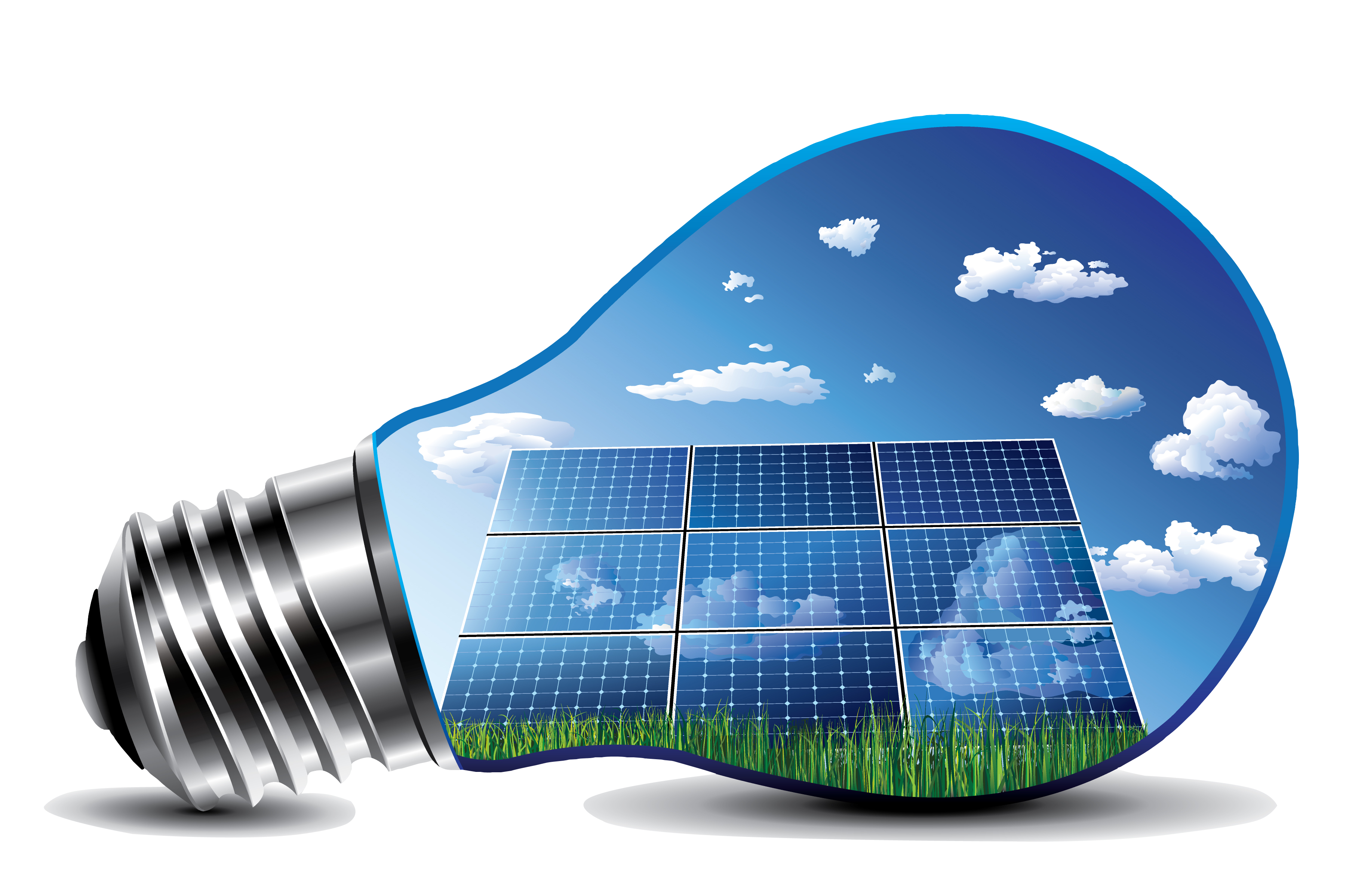
Global warming has always been a major issue that has been ignored. The world is changing for the worse, and we are choosing to ignore it. We produce 2.4 million tons of carbon dioxide a second, and don’t give it a second thought. However due to innovations in science there are alternative sources of energy to carbon. There are solar, wind, wave, kinetic, non-traditional nuclear, and many more. I want to focus on solar power because I believe it has the greatest potential. When people think of alternative forms of energy they think of solar power, but they might not understand how the process of collecting solar energy works.

Solar energy is the process of generating power from the sun’s solar rays. About 70% of the sun’s rays that come to earth bounce right back into space. That leaves 30% for us to harvest into solar energy. There are two ways to harvest solar energy and they are the solar thermal method and the use of photoelectric cells. The solar thermal method uses the sun’s rays to heat water to create energy. Solar panels are used to trap heat to heat up the water inside the panels. The panels are painted black so that the maximum amount of sunlight is absorbed. Photoelectric cells are used to convert sunlight into electricity. The cells are silicon pieces of material designed to absorb sunlight. As sunlight enters the cells electrons begin to move in a current. The electricity is in the form of a direct current. Since little electricity is created from one cell they are grouped together to form an array. The power is then used to charge cells or inverters.
Solar energy has its advantages and disadvantages. Some advantages are that producing energy is free and there is no waste or pollution. Solar energy is very handy in sunny areas where it is difficult to get electricity which helps third world countries produce energy. Solar energy is also very useful for many household objects. Most small electric products and battery chargers can be powered by solar energy cutting down on your home energy bills. However there are disadvantages to solar power. For one they cannot produce energy at night because of the lack of light. To go along with that, solar power is not that reliable in areas that receive less sunlight. For example you would need a lot more solar panels in Finland to produce the same amount as a few solar panels in Spain. Solar power stations are also very expensive to build. Although as technology advances the price goes down, solar power costs a lot more money than other energy sources.


Solar energy is not the only alternative source of energy out there right. There are many other methods to produce clean energy. Although these methods are not that effective right now they will make a big difference in the future when the earth starts to really feel the effects of global warming. Solar energy may seem like it would be an expensive investment on a small amount of energy, but that small amount of energy would not only be helping you but everyone else on the planet.

For more information check out this video - https://www.youtube.com/watch?v=NDZzAIcCQLQFor 

Resources 
http://www.darvill.clara.net/altenerg/solar.htm
https://en.wikipedia.org/wiki/Solar_power
http://www.conserve-energy-future.com/HowSolarEnergyWorks.php